Most legal guides to selling a car in the UAE focus on paperwork checklists. The rule that actually matters most gets buried or skipped entirely: under UAE federal law, you remain legally responsible for the vehicle — fines, accidents, everything — until the ownership transfer is officially registered, not just until you’ve handed over the keys and cash.
The rule that matters most: you’re liable until the transfer is registered
Article 22(1) of Federal Decree-Law No. 14 of 2024 on Traffic Regulation — the law that replaced the UAE’s traffic framework in March 2025 — states plainly that the registered owner remains liable for obligations arising from the vehicle’s use until the Vehicle Licence is formally re-registered in the new owner’s name through the Licensing Authority’s approved process.
In practice, that means a handshake deal, a signed private agreement, or even a full cash payment doesn’t transfer legal responsibility on its own. If the buyer racks up Salik charges, parking fines, or speeding tickets before the RTA (or the equivalent authority in your emirate) processes the ownership change, those obligations can still land on you. This is the single strongest reason to never delay the formal transfer, and to never hand over a car “informally” while you sort out paperwork later.

Advertising rules: no signage on the vehicle itself
Displaying an unapproved “For Sale” sign or sticker on your car is against UAE municipal and traffic regulations. Unauthorised vehicle signage and stickers more broadly can draw fines commonly cited around AED 500 per day until removed, with repeat violations risking black points or, in serious cases, harsher penalties — and a vehicle can be impounded in some circumstances. The safer, and honestly more effective, route is listing the car through a proper marketplace or dealer rather than advertising it on the windshield.
Where the “car washing” fine gets misquoted
You’ll see this rule repeated a lot, often with the wrong number attached: washing your car in a public street, open parking area, or building car park is against Dubai Municipality regulations because of the water runoff and drainage impact. The current fine for this is AED 500, not the AED 100 figure that circulates in older articles — worth knowing since fine amounts have been revised over time. Use a licensed car wash or mobile car wash service instead.
Selling a car with an outstanding loan
This is legal but has a specific sequence you need to follow, and skipping a step stalls everything:
- Get a settlement figure from your bank for the remaining loan balance.
- The buyer and seller typically go to the bank together, and the buyer clears the outstanding amount.
- Both parties sign a sales agreement.
- The bank notifies the Licensing Authority electronically that the loan is cleared — this step alone can take up to 48 hours.
- You’ll usually get an SMS confirmation once the clearance is processed.
- Only then can the buyer and seller complete the ownership transfer.
Build this timeline into your expectations before promising a buyer a same-day handover — a financed car realistically takes several extra days beyond an unencumbered one.
Insurance: the real threshold is 9 months, not 7
If you’re hoping to transfer your existing policy to the buyer rather than cancel it, current guidance from UAE insurers (including Al Buhaira, GIG Gulf, and Gargash) is consistent: the policy generally needs at least 9 months remaining to be eligible for transfer to a new owner, not the 7-month figure sometimes quoted in older guides. Not every insurer offers transfer at all, so confirm with yours directly.
If transfer isn’t possible or the remaining term is shorter than that, you can typically cancel the policy and request a pro-rated refund for the unused months, usually without a separate cancellation fee, though this varies by insurer — get it in writing rather than assuming.
Who’s legally allowed to sell your car
- You, the registered owner, provided there’s no outstanding loan or legal dispute over the vehicle.
- An authorised representative acting on your behalf, via a power of attorney arranged through UAE courts or a notary — this is the legal route if you can’t be physically present, not an informal written note.
- A dealership on consignment, where the dealer lists and sells the car for a commission, though you’re typically still required to be present (or represented via POA) for the final ownership transfer.
Regardless of which route you use, the actual registration of ownership transfer requires the registered owner or their properly authorised representative — an informal stand-in won’t satisfy the Licensing Authority’s requirements.
If you’re leaving the UAE
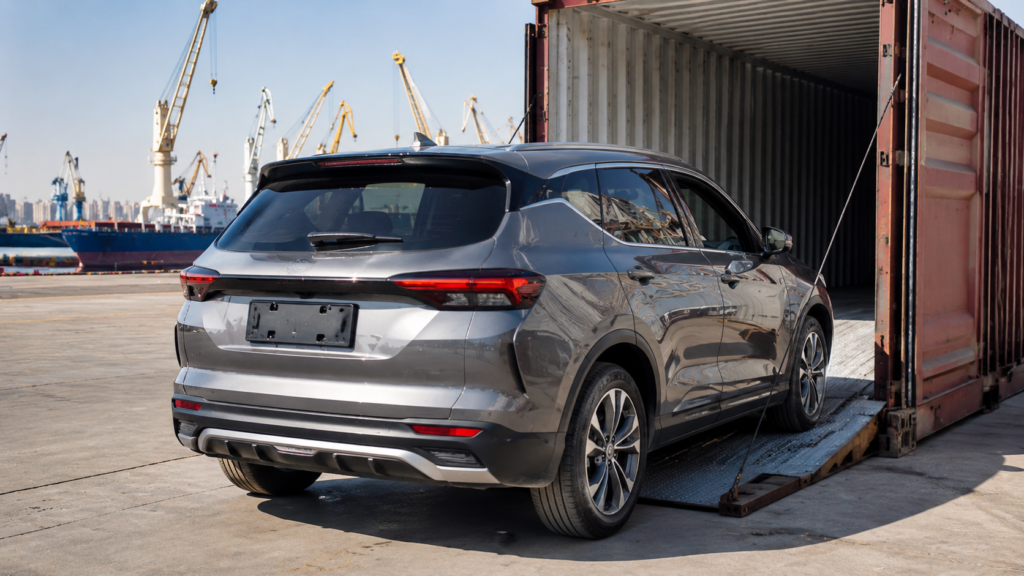
If you’re cancelling your residency and haven’t sold the car, you’re expected to sell or export it before your visa is cancelled — an unsold, unregistered car can accumulate fines in your name (consistent with the liability rule above) or be impounded.
If you’re exporting rather than selling locally, the process runs through the RTA’s export certificate:
- Clear all outstanding fines, Salik dues, and any loan balance — none of this can be pending.
- Pass the export inspection.
- Submit your documents (Emirates ID, Mulkiya, inspection report) at an RTA centre, online, or via the Dubai Drive app.
- Surrender your UAE number plates — once submitted, the car can no longer legally be driven on UAE roads.
- Pay the applicable fees.
- Receive your export certificate, and the vehicle’s registration status updates to “Exported.”
One deadline that catches people out: you must physically export the vehicle within 30 days of receiving the certificate, or the process resets and you have to reapply — an expensive mistake if your shipping company is already holding the car in storage.
Common scams worth naming specifically
- Fraudulent or bounced cheques from a “buyer” who disappears once you’ve handed over the car.
- Partial payment promises where the balance never materialises after the buyer has possession.
- Requests to complete the deal away from an official service centre, which removes the paper trail that protects both parties.
Conducting the handover and payment at an RTA-approved centre, or at minimum verifying the buyer’s identity and payment before releasing the vehicle, closes off most of these.
Frequently asked questions
Am I still responsible for fines after I sell my car in the UAE? Yes, potentially — under Federal Decree-Law No. 14 of 2024, the registered owner remains liable until the ownership transfer is officially registered with the Licensing Authority, not just once money and keys have changed hands.
Is it illegal to put a “For Sale” sign on my car in Dubai? Yes. Unauthorised signage or stickers on a vehicle can draw fines and in some cases lead to impoundment. List the car through a proper marketplace or dealer instead.
How much is the fine for washing my car on the street in Dubai? AED 500 under current Dubai Municipality rules — an older, frequently repeated figure of AED 100 is outdated.
How many months does my car insurance need left to transfer it to a buyer? Generally at least 9 months, based on current guidance from major UAE insurers, though this can vary by provider — confirm directly with yours.
What happens if I don’t export my car within 30 days of getting the export certificate? The export certificate process resets and you’ll need to reapply, which can mean extra costs if the vehicle is already booked for shipping or sitting in storage.