Most “sell your car during Ramadan” guides repeat the same five tips — clean it, photograph it, price it fairly — without ever touching the part that actually determines whether your sale goes through: the legal transfer, the fees, and what happens if there’s still a loan on the car. This guide covers both: whether Ramadan timing genuinely helps, and the concrete UAE process you’ll need to get through regardless of when you sell.
When is the next Ramadan, and is it worth planning around?
Ramadan 2027 is currently expected to begin around February 8, 2027, with Eid Al Fitr falling around March 9–10, 2027, depending on moon sighting. These dates aren’t official yet — they’re based on astronomical calculation and get confirmed closer to the time by the UAE’s Moon Sighting Committee, so treat them as a planning estimate rather than a fixed date if you’re timing a sale months in advance.
Does Ramadan actually increase used car demand in the UAE?
There’s real data behind this, though the numbers vary depending on who’s measuring. Automotive data platform AlgoDriven has reported dealers seeing uplifts of up to 50% in sales activity during Ramadan compared to their yearly average, and used car sales in a recent Ramadan period were reported up roughly 20% year-on-year versus the prior year’s peak. Other estimates, such as from Cars24, put overall Ramadan growth closer to 10%. The range itself tells you something: demand does rise, but “up to 50%” and “around 10%” are very different outcomes, and where your specific sale lands depends heavily on the car, the price, and how it’s presented.
Worth knowing before you get your hopes up: the same Ramadan period that brings buyer traffic also brings a wave of dealer promotions and 0%-finance campaigns on new cars. Some of that increased “buyer activity” is people cross-shopping a new car against a used one, not exclusively hunting the secondhand market. Ramadan is a genuinely good window to sell, but it’s not a guarantee of a premium price — a fairly priced, well-presented car will still outsell an overpriced one, Ramadan or not.
Step 1: Get an honest valuation, not just one number
Check your car’s value against at least two sources — a dedicated valuation tool and a scan of comparable live listings for the same make, model, year, and mileage — rather than anchoring to a single figure. Mileage, service history, accident record, and even paint condition can shift a valuation by thousands of dirhams, and a tool that doesn’t ask about those factors is giving you a rough estimate, not a real price.
Step 2: The part most guides skip — the actual UAE transfer process
This is where a sale can stall if you’re not prepared. The process (using Dubai’s RTA as the reference point; Abu Dhabi’s DMT and Sharjah’s SPT follow a similar structure with some local variation):
- Clear all traffic fines and Salik/Darb dues first. The RTA will not process an ownership transfer while fines are outstanding — this is one of the most common last-minute holdups sellers run into.
- Technical inspection is mandatory for cars older than 3 years. Budget time and a nominal fee for this before listing, since a failed inspection can derail a sale you thought was done.
- Transfer fees. Expect a standard transfer fee in the AED 350–500 range depending on vehicle type and weight, plus a separate AED 50 selling fee paid by the seller. The buyer typically pays their own registration fee, roughly AED 450, separately.
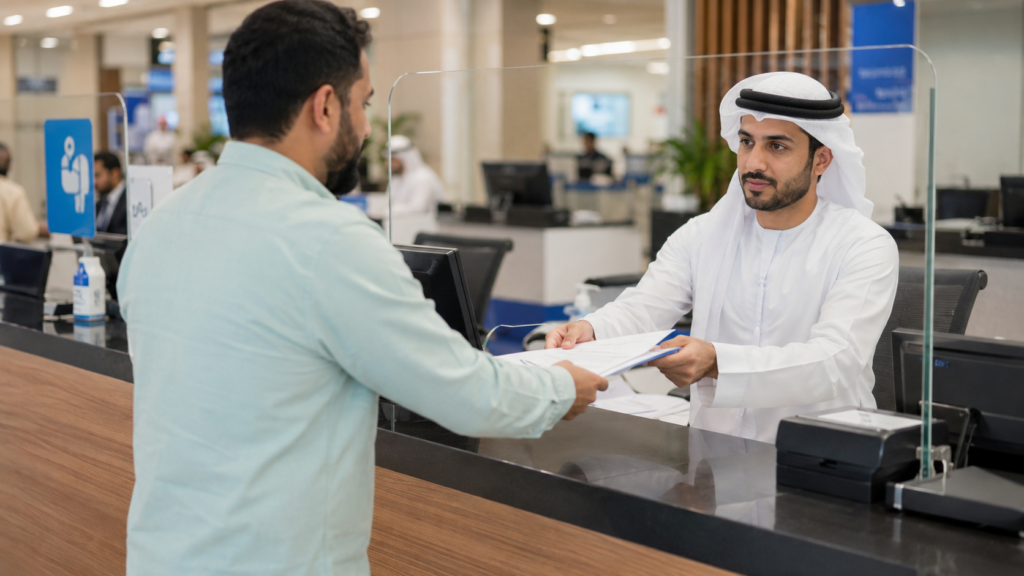
- Both parties normally need to attend an RTA service centre, licensed Tasjeel branch, or Emirates Vehicle Gate location together. If you can’t be present, a notarized power of attorney lets someone complete it on your behalf.
- The buyer has 14 days from submission to finish all licensing steps, or the transaction and its fees are forfeited — worth flagging to a buyer who seems to be dragging their feet.
If your car still has a loan on it
The original point most seller guides miss entirely: you cannot transfer a financed car until the bank formally releases it, and that’s a separate process from the RTA paperwork.
- Request a settlement figure from your bank — the exact amount needed to close the loan. Quotes are typically valid for 7–15 days.
- Settle the loan, often with the buyer present if they’re covering part of the payoff directly. Early settlement can carry a fee, commonly around 1% of the remaining balance — ask your bank to confirm before you commit to a sale price.
- Get the NOC (No-Objection Certificate) / mortgage release letter from the bank once the loan is cleared. Most major UAE banks issue this within 1–3 business days.
- Only then can the RTA transfer proceed — the system won’t release ownership electronically until the bank’s NOC is submitted, even if you’ve already paid off the loan in full.
If you’re selling a financed car, build this timeline into your expectations from the start rather than promising a buyer a fast handover you can’t yet guarantee.
Step 3: Presentation still matters, but keep it proportionate
Wash and detail the car, clear out personal items, photograph it in daylight from multiple angles including the odometer and engine bay, and disclose accident history and service records upfront. None of this is Ramadan-specific — it’s simply what makes any listing credible — but a clean, honestly described car with visible service history consistently sells faster and closer to asking price than one that isn’t.

Timing within the month, realistically
Buyer enquiries tend to run steadily through Ramadan and often pick up in the final one to two weeks before Eid, as people who want a “new” car for the holiday move to close a deal. That said, a well-priced car in good condition has sold in every part of the month in practice — timing helps at the margins, but it doesn’t rescue a car that’s priced wrong or poorly presented.
The mistakes that actually cost sellers money
- Listing before clearing fines or Salik — you’ll waste a buyer’s time and possibly lose them when the transfer stalls.
- Assuming a loan payoff means you’re free to transfer immediately — the bank’s NOC is a separate, additional step.
- Setting a price off a single valuation source rather than cross-checking live listings.
- Skipping the pre-sale technical inspection on a car older than three years and discovering an issue at the RTA counter instead of before you list.
Frequently asked questions
Is Ramadan actually a good time to sell a car in the UAE?
Generally yes — reported demand increases range from roughly 10% to as much as 50% depending on the source and dealer — but it’s not a guarantee of a higher price. A fairly priced, well-presented car will outperform an overpriced one in any month.
When does Ramadan 2027 start in the UAE?
It’s currently expected to begin around February 8, 2027, with Eid Al Fitr around March 9–10, 2027, though the exact dates are confirmed only closer to the time via official moon sighting.
Can I sell a car in the UAE if I still owe money on it?
Yes, but you’ll need a bank settlement figure, to clear the loan, and to receive the bank’s NOC before the RTA will process the ownership transfer — plan for this to take several extra days beyond the standard transfer.
What fees should I expect when selling a car through the RTA?
As the seller, budget for a standard transfer fee (roughly AED 350–500) plus a separate AED 50 selling fee, on top of clearing any outstanding fines and Salik/Darb dues before the transfer can proceed.
Do I need a vehicle inspection to sell my car in Dubai?
Yes, if the car is more than three years old — a technical inspection is mandatory before the ownership transfer can be completed.