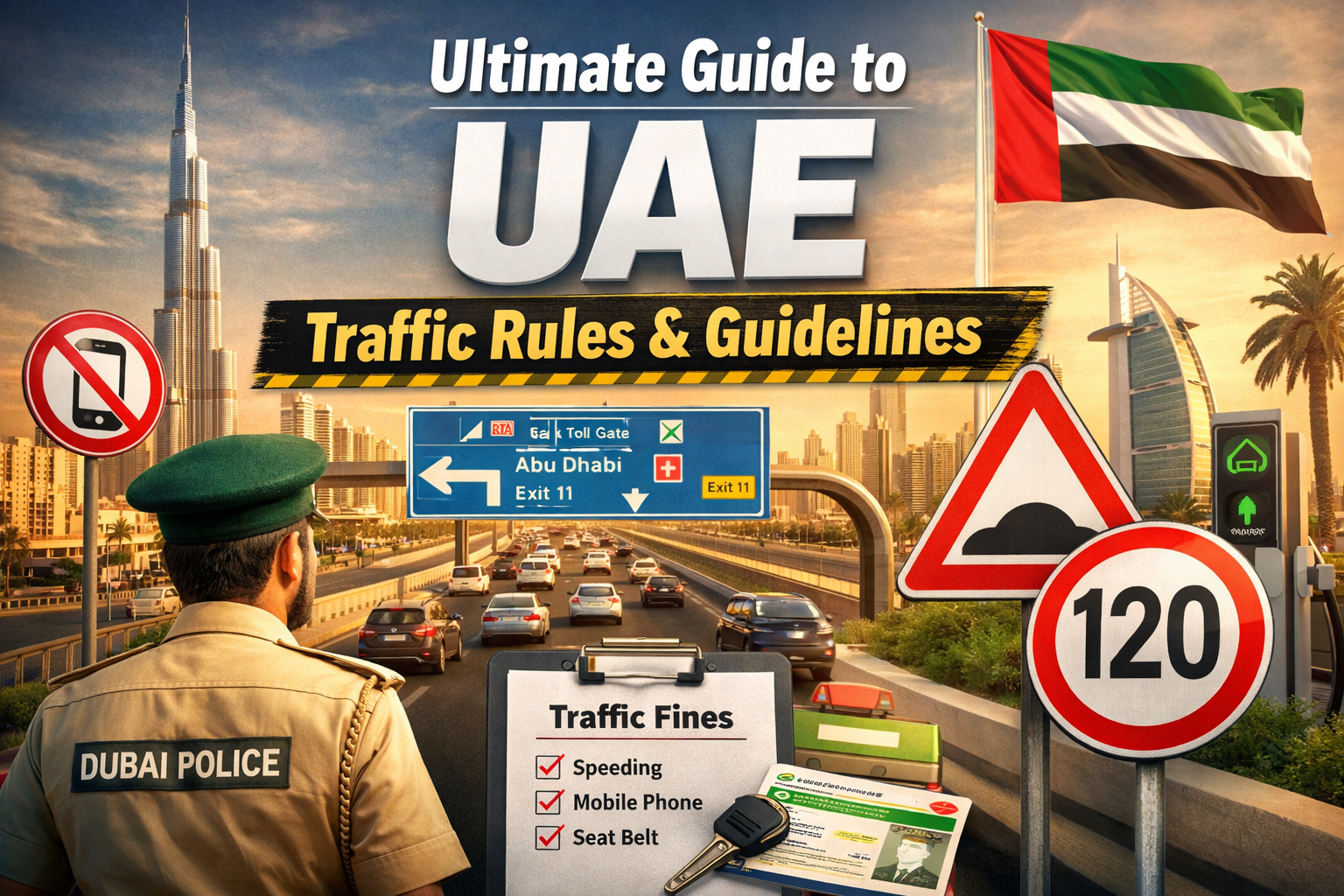
The Ultimate Guide to UAE Traffic Rules and Guidelines provides essential information for drivers in the United Arab Emirates, with a focus on Dubai and key aspects applicable across emirates. The Roads and Transport Authority (RTA) in Dubai oversees vehicle registration, licensing, and many road regulations, while Dubai Police and Abu Dhabi Police enforce traffic laws, issue fines, and promote road safety. UAE traffic rules emphasize safety, zero tolerance for alcohol, and strict enforcement via cameras and patrols.
This guide covers practical topics to help residents, expats, and visitors navigate roads compliantly.
RTA Registration Guide
Vehicle registration in Dubai is managed by the Roads and Transport Authority (RTA). New vehicles must be registered promptly after purchase, and renewals are required annually.
Key steps for registering a new vehicle or renewing registration include:
- Obtain valid vehicle insurance (minimum coverage often required for 13+ months).
- Pass a technical inspection (vehicle test) at an approved center.
- Clear any outstanding traffic fines via Dubai Police or RTA channels.
- Submit documents such as Emirates ID (for residents), passport, Mulkiya (vehicle card), and proof of ownership.
- Pay fees and complete the process online via the RTA website/app, at Tasjeel centers, or customer happiness centers.
For renewals, ensure the vehicle passes inspection, insurance is active, and fines are paid. Services are available digitally through the RTA app or website for efficiency.
(Images: RTA registration process steps and a Dubai registration center.)
Vehicle Inspection Checklist
Vehicle inspection (often called “testing” or “Shamil”) is mandatory for registration renewal and ensures roadworthiness. The RTA uses centers to check compliance.
Common items inspected include:
- Vehicle identification: Registration plate, chassis number.
- Emissions: Exhaust for petrol/diesel engines.
- Brakes: Service brake operation, parking brake efficiency.
- Steering and suspension: Mechanical condition, play, attachments.
- Visibility: Windscreen, mirrors, wipers/washers.
- Lighting: Headlamps, indicators, stop lamps.
- Tyres and wheels: Condition, tread, suspension.
- Safety items: Seat belts, horn, warning triangle.
- Other: Battery, bodywork, noise levels.
For light vehicles, focus on brakes, lights, tyres, and emissions. Failures often stem from worn tyres, faulty lights, or brake issues. Pre-inspection checks at garages help avoid retests.
(Images: Vehicle inspection process and checklist examples.)
Salik Explained
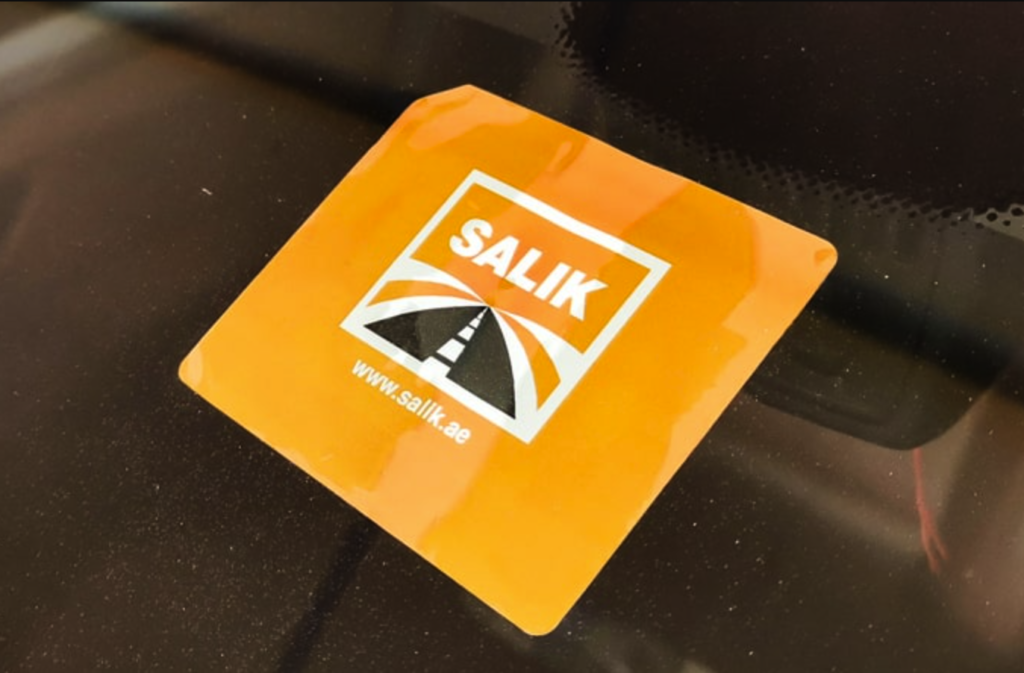
Salik is Dubai’s electronic toll collection system, managed by the RTA, meaning “open” or “clear” in Arabic. It uses free-flow toll gates with no booths or stops—RFID technology deducts fees automatically from a prepaid account linked to your vehicle’s tag.
- Toll fee: Typically AED 4 per gate passage.
- Gates: Multiple locations on major roads like Sheikh Zayed Road, Al Maktoum Bridge, and others (around 8-10 active gates).
- How it works: Affix a Salik tag to your windscreen; top up via app, website, or outlets. No tag? Fines apply.
- Exemptions: Some emergency vehicles; accounts can be managed via the Salik app.
Salik helps manage congestion and funds road maintenance.
Traffic Fines List
Traffic violations in Dubai are enforced by Dubai Police, with a black points system (accumulating points can lead to license suspension). Fines are unified under federal law but enforced locally. Abu Dhabi Police handles similar enforcement in their emirate, with online inquiry/payment portals.
Common violations and penalties (approximate, based on recent updates; check official sites for latest):
- Speeding (exceeding by up to 30 km/h): AED 300, no black points.
- Speeding (over 50-80 km/h excess): Up to AED 2,000, 12 black points, 30-day impoundment.
- Reckless driving/dangerous behavior: AED 2,000+, black points, possible jail.
- Driving under influence (zero tolerance): Heavy fines, black points, impoundment, possible imprisonment.
- Not wearing seatbelt: AED 400, 4 black points.
- Using phone while driving: AED 800, 4 black points.
- Parking violations: AED 200-1,000.
- Other: Driving without insurance/valid registration leads to fines and impoundment.
Pay fines via Dubai Police app/website, RTA channels, or Abu Dhabi Police portals. Discounts may apply for early payment.
(Images: Dubai Police traffic fine notice and black points system infographic.)
EV Charging Stations in Dubai
Dubai promotes electric vehicles through the DEWA (Dubai Electricity and Water Authority) EV Green Charger network, with hundreds of public stations (over1,800 points reported across malls, parking areas, and highways).
Key locations include:
- Shopping malls (e.g., Mall of the Emirates, Dubai Mall).
- Public areas (Dubai Marina, airports, government buildings).
- Petrol stations (ENOC/ADNOC partnerships).
- DEWA centers and sustainable sites like Mohammed Bin Rashid Solar Park.
Use the DEWA app or map for real-time locations, charger types (e.g., Type 2, CCS), and availability. Many are free or low-cost for registered users.
(Images: DEWA EV charging station map and an EV charging at a Dubai location.)
Always refer to official sources like RTA.ae, DubaiPolice.gov.ae, or ADPolice.gov.ae for the most current rules, as regulations can update. Safe driving in the UAE!