Most window tint guides in the UAE repeat the same headline number – 50% is legal, more than that isn’t, and stop there. That’s true but incomplete, and the gaps are exactly where drivers get caught out. A tint can sit at a technically legal percentage and still be illegal for a completely different reason. Here’s the fuller picture.
The legal limits, precisely
- Side and rear windows: must allow at least 50% Visible Light Transmission (VLT) -meaning at least half the light hitting the glass has to pass through.
- Front windshield: must maintain at least 70% VLT. This matters even if you’re not adding aftermarket film, since some cars come with a factory tint band or strip across the top of the windshield – if your car’s windshield glass itself measures below that threshold, it can be a compliance issue independent of anything you’ve installed.
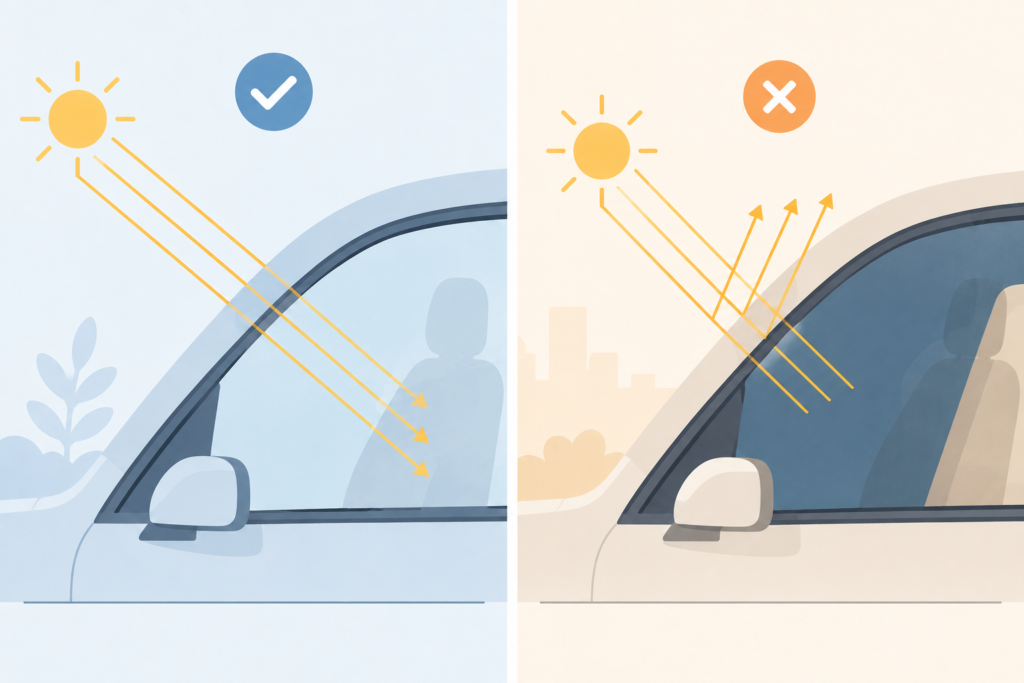
- Reflective or mirrored film is banned outright, regardless of its VLT percentage. This is the rule most summaries skip entirely. A metallic or mirror-finish film that technically measures 50% VLT is still illegal, because the concern isn’t just darkness – it’s glare. A reflective surface can bounce sunlight into the eyes of other drivers and pedestrians, which is treated as a road safety issue separate from the light-transmission rule.
That third point is worth sitting with: two tints can both claim “50% legal” on the box, and one can still get you fined because of its finish, not its darkness.
Why the percentage on the box isn’t the number that matters
Installers and manufacturers describe darkness two different ways — sometimes as “tint percentage” (how dark the film itself is) and sometimes as VLT (how much light gets through the finished, installed glass). These aren’t interchangeable, and the confusion is compounded by the fact that most factory glass already blocks some light before any film goes on. A “50% film” applied over glass that already has some factory tint can push the combined VLT below the legal threshold, even though the film itself was sold as compliant.
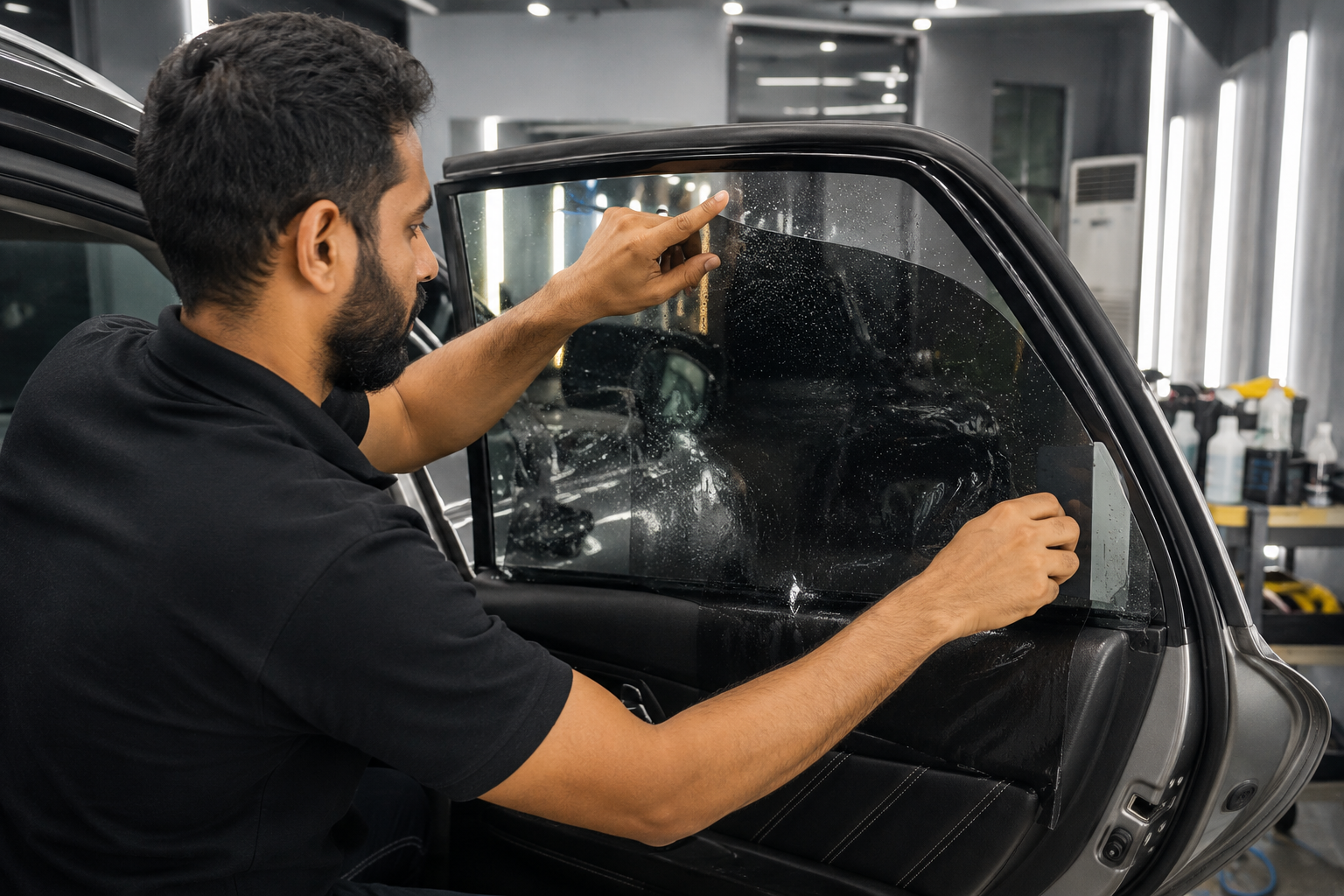
The only reliable way to confirm compliance is to have the installer test the finished, installed window with a tint meter — not to rely on the percentage printed on the film packaging or the installer’s verbal assurance that it’s “UAE legal.” Ask to see the meter reading on the actual glass before you leave the shop.
Fines and what happens if you’re caught
- Standard fine for exceeding the legal tint limit: AED 1,500.
- In Dubai specifically, a vehicle with excessive or non-compliant tint can be impounded, and release requires paying an additional AED 10,000 on top of the original fine and the cost of removing the illegal film.
- Fines can also apply for tinting a windshield beyond the legal VLT, tinting a vehicle category that isn’t eligible (some commercial and heavy vehicles have different rules), or fitting tint that seriously obstructs visibility.
Responsibility for compliance sits with the vehicle owner, not the installer — a shop’s claim that a product is “UAE legal” doesn’t protect you if the finished install measures outside the legal range.
Does this apply the same way in every emirate?
Federal traffic regulation applies the same core limits — 50% VLT on side/rear windows, a clear windshield above 70% VLT — across all seven emirates, and Dubai and Abu Dhabi enforce it strictly. In practice, some of the smaller Northern Emirates are reported to be more lenient in day-to-day enforcement, but that’s an enforcement gap, not a different legal standard — the underlying federal rule doesn’t change based on which emirate you’re driving in, and a car legally registered with compliant tint in one emirate should meet the same standard everywhere else in the country.
Medical exemptions
Drivers with documented medical conditions — extreme photosensitivity being the most common example — can apply for permission to use a darker-than-standard tint. This requires a medical report and approval from the relevant health and transport authorities, and the approval needs to be granted before the darker film is installed, not after. Keep the permit or supporting documents in the vehicle, since a darker tint without proof of exemption reads as a standard violation at a checkpoint.
Tint types and what they actually do
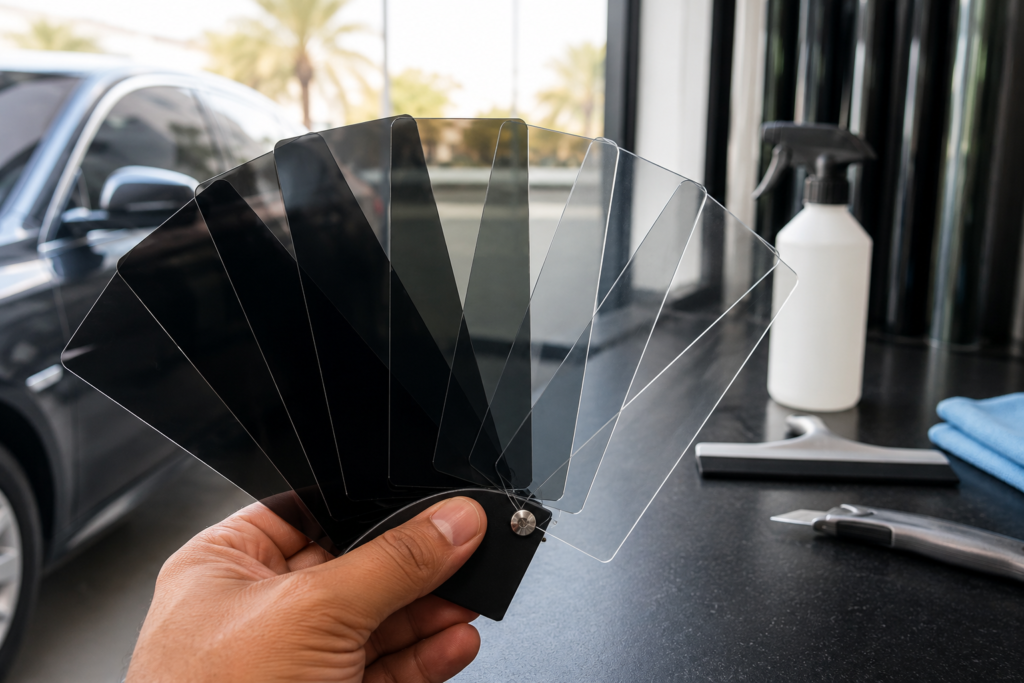
- Dyed film — cheapest option, decent privacy and glare reduction, weak heat rejection, and lower-quality versions can fade or turn purple with UAE sun exposure over time.
- Metalised film — better heat rejection and durability than dyed film, but the metallic content can interfere with mobile signal, GPS, and toll transponders (relevant for Salik-equipped windshields specifically, since side/rear tint doesn’t affect this).
- Carbon film — solid mid-tier option: better heat rejection than dyed film, doesn’t interfere with electronics, holds its colour longer.
- Ceramic film — strong heat and UV rejection while staying clear and non-reflective, no signal interference; generally considered the best fit for UAE conditions but priced accordingly.
- Nano-ceramic film — marketed as an upgraded ceramic tier, but the term gets used loosely in advertising — ask for the specific product name and its tested performance figures rather than taking “nano-ceramic” at face value.
What it costs
- AED 150–400 for basic dyed tint
- AED 400–800 for carbon or entry-level ceramic
- AED 800–1,500 for branded ceramic
- AED 1,500+ for premium multilayer film
Larger SUVs and vehicles with more complex glass cost more to tint than a small sedan or hatchback. The cheapest option in each tier isn’t necessarily false economy, but a very low price relative to the category usually means a thinner or less durable film — factor in how long you plan to keep the car before deciding how much to spend.
Buying a used car? Check the existing tint
If you’re buying used, verify the current tint is both legal and properly installed — bubbling, peeling, or a hazy finish usually means a lower-quality film that will need replacing sooner than you’d expect, and if the previous owner installed anything reflective or below the legal VLT, that liability transfers to you the moment the car is registered in your name.
Frequently asked questions
What is the legal window tint percentage in the UAE?
At least 50% VLT on side and rear windows, and at least 70% VLT on the front windshield. These are federal limits applied consistently across all emirates, though enforcement strictness varies somewhat in practice.
Is reflective or mirrored window tint legal in the UAE?
No — it’s banned regardless of its VLT percentage, because of the glare risk it poses to other drivers, not just because of how dark it is.
What’s the fine for illegal window tint in the UAE?
AED 1,500 as a standard fine. In Dubai, excessive or non-compliant tint can also result in vehicle impoundment, requiring an additional AED 10,000 release fee.
How do I know if my tint is actually legal, not just advertised as legal?
Ask the installer to test the finished, installed glass with a tint meter and show you the reading – the percentage printed on film packaging doesn’t account for your car’s existing factory glass tint, which affects the combined VLT.
Can I get a darker tint for medical reasons?
Yes, with a medical report and prior approval from the relevant health and transport authorities — the exemption must be granted before installation, and supporting documents should be kept in the vehicle.