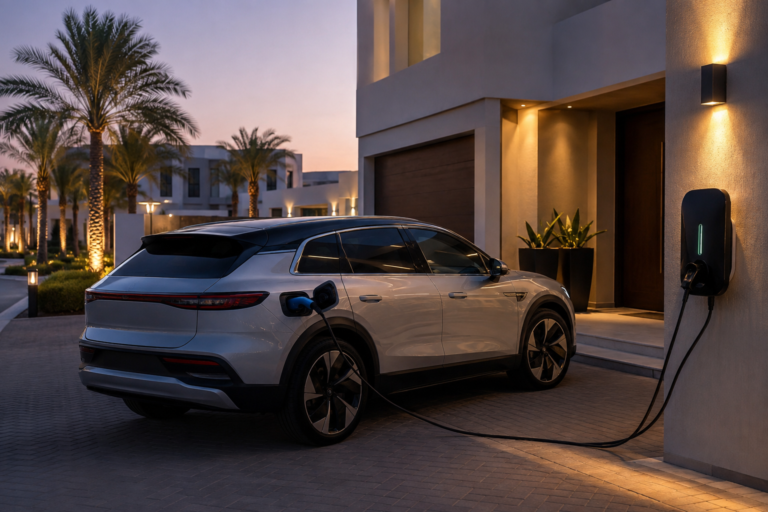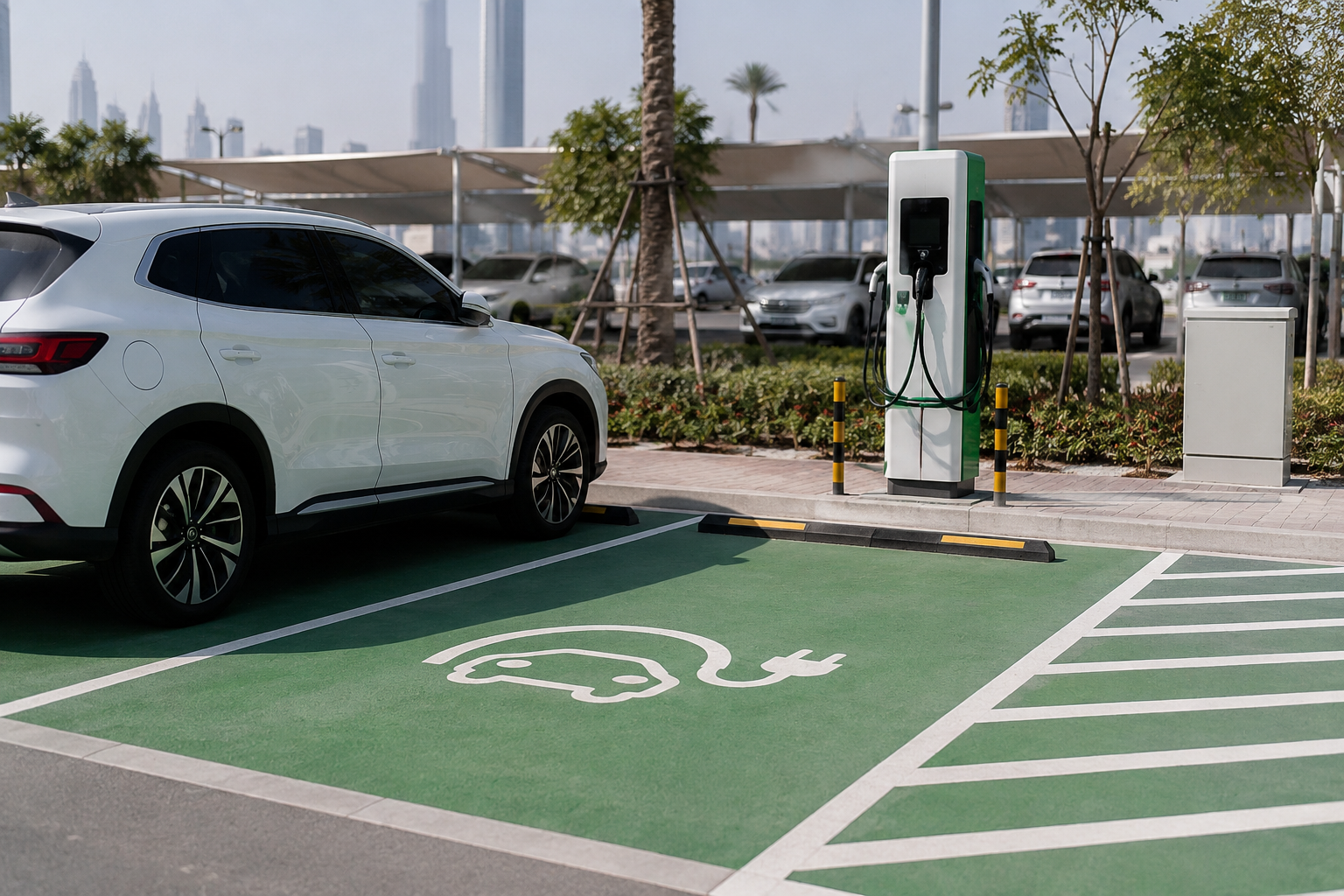
Most answers to this question are confident-sounding guesses dressed up as advice: “occasional fast charging is fine, but don’t overdo it.” That’s not wrong, but it’s vague enough to be useless when you’re standing at a charger deciding whether to stop at 80% or keep going. There’s now large-scale real-world data on this, and it says something more specific — and in one respect, more reassuring — than the usual folk wisdom.
What the numbers actually say
Geotab, which tracks EV battery health across commercial and consumer fleets, published an updated analysis in January 2026 covering more than 22,700 vehicles across 21 makes and models. The headline figures:
- Average battery degradation across the fleet: 2.3% per year (up from 1.8% in Geotab’s 2024 analysis, reflecting a broader and more diverse vehicle sample).
- Vehicles relying heavily on DC fast charging above 100kW degraded faster: up to 3.0% per year, compared with roughly 1.5% per year for vehicles charged mostly on AC or lower-power DC.
- Projected capacity retention: about 81.6% of original capacity after 8 years at the average degradation rate — which lines up with why most manufacturers now offer 8-year battery warranties rather than treating it as a gamble.
So yes, heavy reliance on high-power fast charging does measurably accelerate wear — roughly double the annual rate compared to AC-dominant charging, in aggregate. But even at the higher end, a battery is still projected to retain the large majority of its capacity after eight years of ownership. This isn’t “fast charging destroys batteries.” It’s “fast charging is now the single strongest factor in the data, and its effect is real but gradual.”
The part that updates the conventional wisdom
Here’s where the Geotab data actually contradicts some of the commonly repeated advice: it found that vehicles regularly using a wide state-of-charge range — routinely running the battery from low to full — did not show meaningfully higher degradation, unless they spent prolonged, habitual periods parked at very high or very low charge levels.
In other words, charging to 100% before a road trip and then driving it down isn’t the problem the “never charge past 80%” rule implies. The actual risk factor is leaving a battery sitting at 100% (or near-empty) for extended periods, not the act of reaching those levels briefly. If you charge to 100% and drive off within a reasonable window, the data doesn’t show that being especially harmful. If you charge to 100% and then let the car sit in a hot parking spot for three days, that’s a different story.
Why battery chemistry changes the advice — and most guides skip this
Not all EV batteries are the same, and the “stop at 80%” rule doesn’t apply uniformly. The UAE market has a meaningful split:
- NMC (nickel-manganese-cobalt) batteries — used in longer-range trims across most brands — pack roughly 20–30% more energy density than LFP but are rated for a shorter cycle life, typically around 1,500–2,500 full cycles before dropping to 80% of original capacity. These are the batteries where the “avoid 100%, avoid empty” guidance matters most.
- LFP (lithium iron phosphate) batteries — used across every BYD model sold in the UAE, as well as standard-range Tesla Model 3 variants and several other budget-focused EVs — are rated for roughly 3,000–5,000 full cycles, tolerate full charges far better, and are chemically more heat-stable. Manufacturers of LFP-equipped cars commonly recommend regular full charges to 100%, partly because it’s genuinely not harmful for this chemistry and partly because it recalibrates the battery management system’s range estimate.
This means the right charging habit actually depends on which battery is in your car. If you’re driving a BYD or another LFP-equipped EV, following generic “never charge past 80%” advice may actually leave your range estimate less accurate over time, against the manufacturer’s own guidance.
Is fast charging worse in the UAE specifically?
There’s a real basis for concern here, and it’s worth grounding in actual numbers rather than just “it’s hot.” A car parked in direct UAE summer sun can reach cabin temperatures of 70–80°C within about an hour, and ambient summer temperatures routinely exceed 45°C. A battery that’s already thermally loaded from a hot cabin, a motorway drive, or sitting on sun-baked asphalt starts a fast-charging session from a worse thermal position than the same car in a mild climate.
The charging infrastructure itself has also gotten considerably more powerful in the UAE recently, which raises the stakes on this question. DEWA’s public network runs AC chargers alongside DC fast chargers up to around 150kW; ADNOC’s E2GO network operates over 400 charging points UAE-wide and opened the ADNOC EV Megahub at Saih Shuaib in January 2026 — the largest superfast charging facility in the Middle East, Africa, and Turkey, with 60 high-speed chargers capable of a 0–80% charge in about 20 minutes; and Tesla’s UAE Supercharger network supports charging up to 250kW on compatible vehicles. Higher available power means the car’s battery management system has to work harder to limit current when the pack is already hot — which is exactly what modern EVs are designed to do automatically, throttling charging speed rather than accepting damaging levels of current.
Practically: a slower-than-expected charging session on a 45°C August afternoon in Dubai usually isn’t a faulty charger — it’s the car protecting itself, which is the system working as intended, not failing.
Practical charging habits that match the actual data
- Use AC charging for routine, everyday top-ups — it generates less heat and the Geotab data associates it with meaningfully lower long-term degradation.
- Check your battery chemistry before adopting a strict 80% rule. If your EV uses LFP (all BYD models, several other budget EVs), following your manufacturer’s guidance on regular full charges is usually correct, not risky.
- For NMC-equipped cars, stopping around 80% for daily use is still sensible — charging slows dramatically past that point anyway, so you’re not losing much practical time.
- Avoid letting the car sit at 100% or near-empty for days at a time, especially in a hot parking spot — this, not the occasional full charge, is what the data flags as the real risk.
- Use shaded or covered parking during peak summer heat where possible, particularly before a fast-charging session.
- Don’t assume a slow fast-charge session in summer means a broken charger — it’s very likely the battery management system reducing current to protect the pack.
Frequently asked questions
Does DC fast charging really damage an EV battery?
It measurably accelerates degradation with heavy, habitual use — real fleet data shows about 3.0% annual degradation for vehicles relying heavily on 100kW+ fast charging, versus roughly 1.5% for AC-dominant charging. Occasional fast charging has a much smaller effect.
Is it bad to charge an EV to 100%?
Not inherently, according to large-scale fleet data — occasional full charges before a long trip aren’t a major degradation driver. The actual risk is leaving the battery sitting at 100% (or near-empty) for extended periods, especially in heat.
Should I always stop charging at 80%?
It depends on your battery chemistry. For NMC batteries (most long-range EVs), it’s a reasonable daily habit. For LFP batteries (all BYD models, standard-range Tesla Model 3), manufacturers commonly recommend regular full charges instead.
Does UAE heat make fast charging more damaging?
It’s a real factor — UAE cabin temperatures can hit 70–80°C in direct sun, and a thermally loaded battery starts a fast-charge session in a worse position. Modern EVs automatically slow charging speed to compensate, which is the system protecting the battery, not a malfunction.
How much capacity does an EV battery typically lose over time?
Based on Geotab’s fleet analysis of over 22,700 vehicles, the average is about 2.3% per year, projecting to roughly 81.6% of original capacity retained after 8 years under typical use.